

Alice Ball: The Chemist Who Conquered Leprosy at 23

Born in 1892, American chemist Alice Ball was the first African American woman to graduate from the University of Hawai‘i and, at 23, became its youngest instructor.
Despite a tragically short career, she developed the “Ball Method” — the first effective injectable treatment for leprosy — which remained in use until the 1940s.
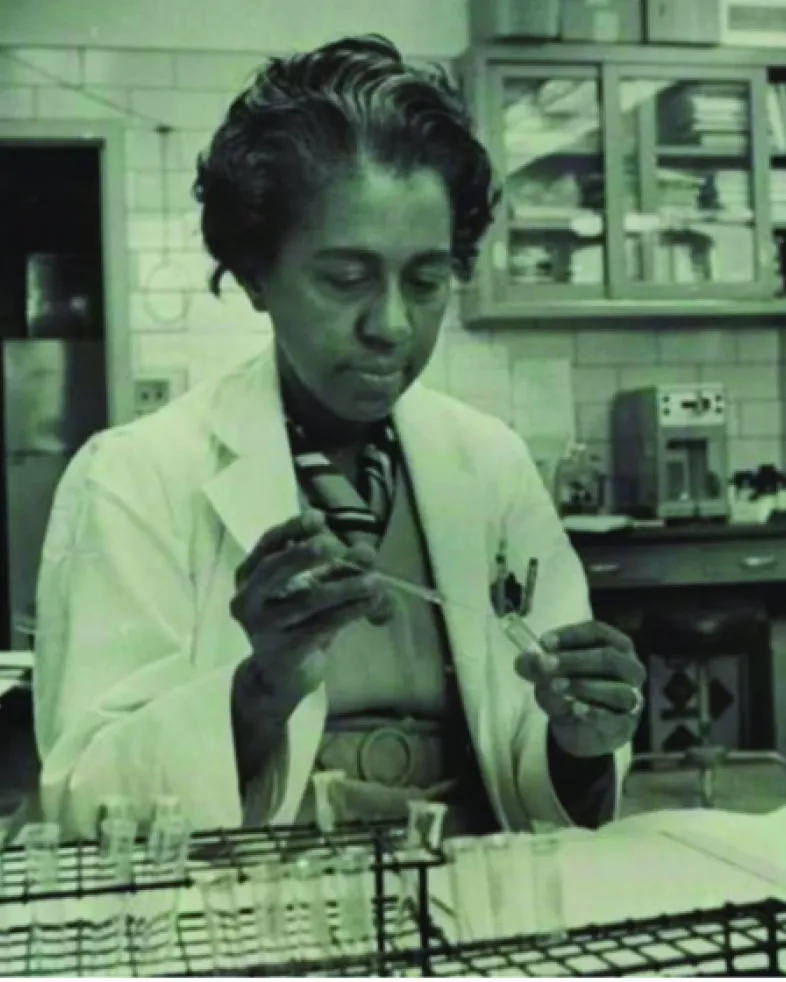
Her work, first stolen, is now recognized.
Alice Ball studied chemistry at the University of Washington and the University of Hawai‘i. In 1915, she graduated and began researching treatments for Hansen’s disease (leprosy).
She devised a breakthrough approach using chaulmoogra oil — then the only known substance with activity against Mycobacterium leprae — by making it injectable.
The oil, naturally viscous and toxic when taken orally, had previously been ineffective. Ball developed a chemical process that transformed its fatty acids into a form that could be safely injected and absorbed.
The chemical solution: making the oil water-soluble
Specializing in pharmaceutical chemistry, Ball modified the chemical structure of the main compounds in chaulmoogra oil — its fatty acids.
Her goal was to make these molecules hydrophilic and absorbable by the body, using a process called esterification.
She converted the fatty acids into ethyl esters, reducing viscosity and enabling intramuscular injection without painful subcutaneous deposits.
Two major benefits:
- Injectability: Ethyl esters are far less viscous, allowing formulation suitable for intramuscular injection.
- Efficacy: The modified compounds were better absorbed into the bloodstream and tissues, directly targeting the bacterium.
The Ball Method transformed a painful and ineffective treatment into a tolerable, scientific, and injectable therapy. It remained widely used for more than twenty years.
Oral administration had caused toxic nausea and poor absorption; Ball’s injectable approach overcame these limitations and improved outcomes for patients.
Sadly, at just 24, Alice Ball fell ill during laboratory work and died suddenly. The exact cause was never definitively established.
Posthumous invisibilization: the Matilda Effect
After Ball’s death in 1916, injustice deepened: Arthur L. Dean, then president of the University of Hawai‘i, initially took credit for her discovery, referring to it without acknowledging Ball.
Eventually, colleagues and historians restored proper attribution to Alice Ball, and her legacy is now publicly recognized.
Today, plaques and commemorations honor her contribution, and the Ball Method stands as a landmark in medical innovation.